Tuesday, March 15, 2011
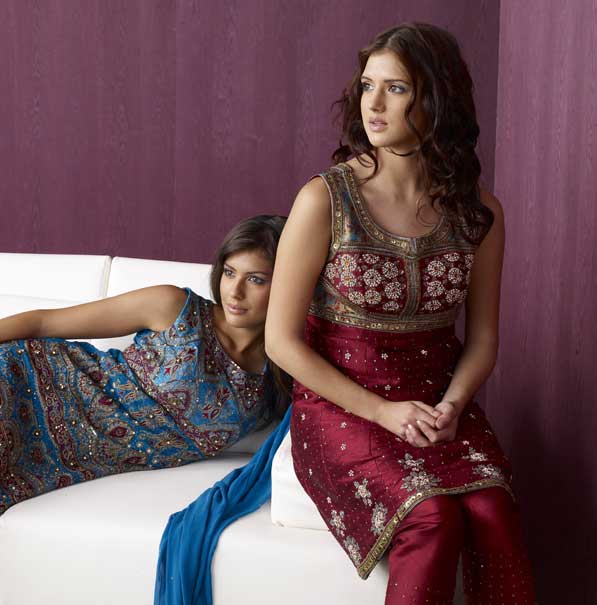
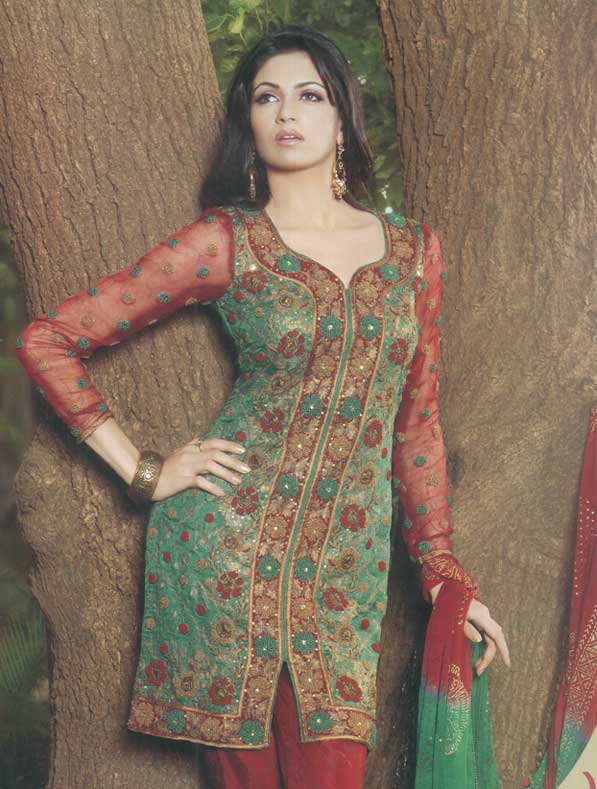
Ever heard of a Terry Voile Salwar kameez?
Wednesday, February 23, 2011
Wednesday, March 10, 2010
The comfort factor of Indian Salwar Kameez
The salwar kameez is widely regarded as the most comfortable of all Indian garments. The variation in styles allows easy movement as well as versatility. Once the proper fabric for the suit is chosen, it is time for the artisan to display his handiwork. Hand worked fabrics are those which are embroidered or embellished using manual skills. Flawless hand embroidery requires a lot of dexterity and patience. India is famous for it’s regional styles of needlework and has numerous artisans all over the country who are experts in provincial embroidery work.
The most widely preferred of all Indian needlecraft is the renowned Lucknowi chikankari. Chikankari salwar kurtas are very popular because of their elegant style as well as the comfort factor. Chikankari is also practiced in Rampur and Agra, both of which are well known too. Chikankari work consists of delicate floral designs stitched onto fine cotton or muslin cloth. Other than chikankari, the hand painted designs and Jamdani weave of Faizabad is also quite admired.
Among the prominent embroidery styles of northern india, the Punjabi ‘phulkari’ is widely practiced. ‘Phulkari’ which means growing flowers, is practiced by Punjabi women and can trace its origins as far back as the Vedic ages. ‘Phulkari’ work is done using silk floss on ‘khadi’. The stitching is complicated as a single thread is used at a time and worked in various directions to achieve the light and shadow effect. Chope, ghunghat bagh, suber, darshan-dwaar and chamba are some of the common ‘phulkari’ styles.
Eastern India is famed for its Bengali ‘kantha’ stitch, especially on wedding sarees. The various styles of ‘kantha’ stitching include sujni kantha, archilata kantha, durjani kantha and rumal kantha. ‘Kantha’ stitch is basically running stitch cleverly sewn to resemble various motifs. The style of stitching varies from the simple style to the mat style, maze style and tessellation style. Neighbor Sikkim on the other hand is recognized for its leather appliqués.
Western India has its mirror work over colorful thread embroidery which is a specialty of the Rajasthani gypsies. Rajasthan is also famous for block printing, bandhini (tie and dye) and of course the intricate Jodhpuri jaali work. Coming to central India, the zari work of Indore and Bhopal are much appreciated.
Another kind of legendary Indian embroidery is the Aari or Zardosi embroidery. This variety of embroidery was introduced by the Mughals. ‘Aar’ which means needle is done on a wooden frame which keeps the cloth fixed and stretched out. The designs are copied onto the fabric and then thread is traced over the outline. This method is borrowed from the technique of cot making. It enables artisans the freedom to use both hands thus increasing speed and expertise. Once the designs are overlaid with thread, beads, sequins and gold or silver wires are used for further embellishment giving the finished product a rich look.
Indian needlework has always attracted connoisseurs from around the world with its distinctive style and the level of skill shown by artisans. The art of this embroidery are passed on from one generation to another and always leaves people awestruck at the beautiful designs.
Monday, January 25, 2010
Indo-Western Trends in Salwar Kameez
Westernization is at its, zenith touching all aspects of the Indian way of life. So why should the humble Indian Salwar Kameez be left behind which is donned on by a majority of the females in India, from the mustard fields of Chandigarh to the desert region of Rajasthan. So, what is Indo-Western trends in Salwar Kameez ?
And if you thought this indo-western trend in salwar kameez won’t go down well with Indian women then look around you. The first mark of this indo-western trend in salwar kameez is the absence of the dupatta or the scarf, which is worn and carried differently by different women. If it has not totally disappeared, then it has lost considerable length in terms of meters. As per the Indian Salwar kameez trends of yester-years, the dupatta was an inescapable part of any salwar kameez ensemble.
It still is considered vital by a certain section and can’t be hailed as the only way of adapting to the Indo-western trends in Salwar Kameez. Sleeveless tunics, strap and spaghetti sleeved tunics worn over traditional Indian Pajamas and carried with a dupatta have been around for a decade now and are still in vogue, only that now they are worn over slacks or what most people call 'legging', which Wikipedia defines as "fitted, long tapering garments to cover the legs".
Indian Standards once considered these leggings immodest but thanks to the Western Salwar Kameez trends, they have become the most sought after piece of clothing in India. Everyone, from a teenage girl to a homemaker to a female corporate executive is considering leggings as a comfortable option to couple up with the kurta or the kurti.
Interestingly, though many of us are familiar with the Indian Salwar Kameez Trends, we are often found to be at a loss when it comes to differentiating between the two i.e. the kurta and the kurti. Well, the only difference is that the kurti is shorter and at present reaches just below the hip. And Yes! u guessed it right. It is another mark of indo western trends in salwar kameez.
One could see the impact of western trend in salwar kameez with empire-neck tunics and tunics with a centre yoke, worn over pajamas or leggings, making a foray into the Indian Market and take it virtually by storm. This western trend in salwar kameez shouldn’t come as a surprise, after all the foreigners are known to have been enchanted with vibrant colors, for which Indians have a fetish, since ages. They have modified the Indian Clothing to suit themselves - they made a tunic, which was a mix of Lycra and cotton that gave the quintessential feminine look that every female aspires for.
The Indians picked up these western trends and combined it with their age old ones, thus giving rise to the indo-western trends in salwar kameez, which is here to stay for atleast two to three years, thanks to the flexibility it has provided the Indian Woman in terms of design, cut, color and fabric.
Wednesday, January 13, 2010
Indian Bridal Salwar Kameez - Elegance with Ease
In spite of stiff competition from Sarees and ghagra cholis, the Indian salwar-kameez has maintained its position as the most convenient and graceful garment in Indian fashion. The fame and ease of the shalwar kameez has reached such breathtaking heights that most of the fresh breed designers have started channelizing a chief fraction of their creative abilities to give this ensemble a novel look. Varying from the ethnic touch to the cocktail look, the salwar kameez has come to go well with all occasions, especially weddings.
In general, there are diverse costumes for bride in different religions. Conventionally speaking, Indian Salwar Kameez is the bridal wear for only Punjabi women in India. Nowadays, however, young brides from North India also wear salwar kameez on their marriage day. A Sikh bride wears a dazzling shalwar kameez, especially the kurta is very gorgeous. The color of the Kameez is by and large red or magenta. The Dupatta is a necessity on the head of the bride. The salwar kameez is a heavily embroidered one.
Traditional Indian Salwar Kameez has specific design. Salwar or bottom part is a sort of slack Pajama like trouser. In the traditional design, it is broad from top. It has 4 to 5 inches belt attached to rest part of the salwar that is pleated. Upper part of the belt has passageway for the drawstring. Salwar has big room at thigh and calf area. Salwar has almost double bottom size as the perimeter of the ankle so as to make good space for the feet to put inside for wearing.
Traditional Kameez, also called kurta is usually long up to knee with wide fringes (Gher). It is approximately entirely covered from the back as back neck line depth like 2-3" and intermediate low at the front like 6-7" inches as front neck line in deepness. It is open or broad at neck like 6-7" inches to put the head into the Kameez. That is, kameez is usually found long upto knee, drawn out sleeves, medium neck and low down back depth.
The bridal salwar kameez is traditionally made on these lines as well. On the Indian subcontinent, for nuptial purposes you can opt for colors like rust brown, hues of red and yellow since it is considered propitious colors for Indian bride. The rich colours that are used are figurative of festivity/fertility. In our day, brides desire a modern-day look, a balance of contemporary design with the tradition. Yet, there are brides who dare to look ostentatious or don’t mind going for the 'mix and match look'.
The bridal salwar suits come in diverse fabrics and styles. Mostly bridal suits are offered in silk and brocade. Heavy embroidery is made on the suits with zardosi and zari work. Lucknow is prominent for its legendary chikankari suits. But the styles chikankari and zardosi have evolved over the years. Zardosi embroidery, which is done with gold thread, is typically seen in bridal suits. At the present time, Patiala style of salwar suits is in vogue; although churidar styles are also seen around. It has loads of gathers, and drapes in a well-designed mould forming smooth folds from hip to ankle. With the passage of time, the fashion of kameez salwar suits or kurtas has altered. A striking salwar kameez with elaborate golden embroidery beauty is an unparallel and extremely attractive suit, just the thing for brides looking for something exclusive.
Designer Salwar kameez have no parameters of creativity or it does not follow the rules of customary parameters even when they are being designed for weddings. Designer Salwar Kameez may be the result of non-uniform inventiveness, out of the box thoughts, odd combinations, uneven sections and disproportionate number of fabrics but the result is sheer beauty and elegance personified. Sometimes the churidar itself is immensely eye catching with exquisite designs on the lower part.
Designer Shalwar suits put into practice work like uneven patches of diverse fabrics on the base material, resham embroidery, silver embroidery, golden embroidery, metal beads, real pearls, unusual shapes and curves, stylish cuts, buckles, wood beads, glass beads, glass work, lace work and net work. Fashion designers follow amalgamation of varied beautiful and traditional concepts in terms of designs and patterns by means of a great combination of silk or cotton threads. At times you see brightly coloured kurta with a dazzling churidar, or may be the vice versa. Designer salwar kameezes are perfect for marriage and party wear and even as the bridal wear.
Hence, although bridal shalwar kameez is not worn by many because a saree is still the preferred wedding attire of most Indian women, but still, there are a good number of takers of the traditional ensemble today, its popularity as a wedding wear, growing by the day.
Wednesday, December 16, 2009
The Charm of Traditional Indian Salwar Kameez
Salwar Kameez, a personification of north Indian ethnicity, has contemporarily become one of the most preferred attire all over the nation .Although, Salwar Kameez had actually originated in North India, presently it is accepted in all other states; may be in different forms and style. A North Indian person of India normally wears Salwar Kameez. It is a long –established dress for the Punjabi ladies of North Indian. Indian attire is a representation of self-respect and simplicity and it is very comfortable, yet allowing ultimate comfort to the person who is wearing.
Salwar Kameez is made up of three significant parts that unifies together to give a lovely Indian attire. The dress is a combination of three parts. The upper part of the dress is known as Kameez which is a long piece of cloth up to the knee; well tailored according to the body shape of the wearer. The lower part of the dress is known as Salwar and Chunni or Dupatta is a part another of Salwar Kameez, which is veiling cloth of the entire dress.
This Indian Salwar Kameez has different fittings, various neck styles, sleeves length, underneath circumstances and different types of cuts. The Kameez portion is almost covered from neck to the knee. The back neck line depth is like 2-3 inches and in front neck line the depth is 6-7 inches. It is kept wide or broad at the neck like 6-7 inches to put the head into. Nowadays various neck styles are available in the market like round neck which seems like semi circle in the front and a round shape at the back of the Kameez depending upon the design given. The U-neck shape looks like the alphabet ‘U’ from the front and the back design as per the design given by the customer. The V-neck resembles the alphabetic ‘V’ front and the back design is given by the persons. The pointed U-neck is pointed with a very small v at the front of ‘u’ neck. The spilt round neck is round with a front opening of 2 inches. The boat neck designs look like a boat with a low from front and the back neck is around 4-5 inches with wide broad shoulders like 9-10 inches. The square neck is like mathematical square in the front and the back depends as per the design given. The Mandarian collar is front open along with a high collars.
The Salwar is the lower portion of the dress which is normally wide from the top. The Salwar portion has 4-5 inches belt to the rest part of the Salwar which is then pleated. The upper of the Salwar has a channel to draw a string through it to keep the Salwar knotted above the belly. For extra comfort there is a large span of cloth in the thigh area. There is a double bottom size, as the circumference of the ankle to make the feet to put inside for wearing.
To promote various designs in the traditional Shalwar Kameez, Churidar Salwar or Churidar Kameez and Patiala Salwar has also become very popular.
Tuesday, December 01, 2009
Craze for Fancy Salwar Kameez - Globalization of This Indian Attire
The craze for fashion Shalwar Kameez is increasing day by day. Even people out side India adore dressing in a designer salwar kameez. Indian patterns and designs attract and allure everybody towards our custom and traditions. Embroidered fashion salwar kameez presents the Indian ingenuity and attracts people with their work and designs. Many types of needlework are their in trend since a long time and people love to dress in diverse and eminent Indian embroidery designs.
The gorgeous fancy shalwar kameez is designed with ethnicity. Kameez detailed with complementary thread and sequins work embroidery all over the front panel look beautiful. Contrasting embellished patchwork on sleeves and daman also looks amazing. Neck designs of salwar kameez and central panal of the kameez with appealing laces adds superfluous poise to this beautiful outfit. Churidar salwars and kurtas are relatively simple. Dupatta with pretty laces on ends adds the extra beauty to this conventionally designed fashion shalwar kameez.
The latest designs of salwar kameez make the outfit alluring and stylish to go according to fashion and custom. Beautiful designer salwar kurtas in striking prints detailed with contrasting patchwork and mirror work on the neck look wonderful. Complementary net laces embellishing neck design, sleeves and daman is a true beauty to the salwar kameez design.
Indian shalwar kameez is the amalgamation of tradition and ethnicity. Intricate designs and pattern makes it just the right style for any Indian occasion. Beautiful fancy kameez in strip prints detailed with thread work embroidery all over the front panal looks amazing. Contrasting yoke and sleeves adds additional grace to this beautiful outfit.
Well-designed and traditional anarkali style salwar kameez is the style of today. Skillfully designed, the kameez in anarkali style kaliyan pattern is detailed with attractive sequins chip embroidery on the neckline. Printed patchworks on sleeves and daman looks marvelous. Gota patti on the complete ghera imparts extra grace to this gorgeous outfit. Churidar salwars are generally plain or may be printed or embroidered.
Cotton salwar kameez is the best outfit for the Indian summers. Intricate designs and pulsating colors make it chic and ethnic attire. Indian fashion shalwar kameez that easily catches ones eye with its most up-to-date styling is what makes this simple style so popular among females. The pure cotton designer Indian salwar kameez can be made more appealing with detailed dense mirror work embroidery all over the front panel. Cotton salwars may have sequins spread all over. Harmonizing dupattas with churidar salwar kameez comes with tassels on pallu.
Embroidery salwar kameez is one of the Indian dresses which look beautiful even when worn in any kind of occasion. These gaceful salwar kameezs available everywhere is designed with thread work embroidery and distinct patchwork on daman and sleeves. Laces on daman and sleeves looks even more amazing. Churidar salwars can be retained plain. Matching dupatta with contrasting patchwork on edges gives more beauty to the designer cotton silk salwar suit. You can try out these ethnic salwar kameez for any occasion, the gorgeous look and the charisma of a salwar suit can indeed steal every body’s eye at a glance.
Fancy salwar kurtas in cotton, crepe or georgettes detailed with self thread and sequins work embroidey spread all over the front panel are all the rage nowadays. Salwar kameez neck designs, sleeves and damans with beautiful threads and sequins work of diverse shade looks spectacular. Cotton salwars designed in striking prints and contrasting shades compliments the kurtas even better. Chiffon dupattas with beautiful prints and pretty laces on edges looks awesome with the fancy shalwar kurtas. The fancy salwar kameez is really liked as the easy to handle yet trendy summer fashion of today.
International and Hollywood celebrities like Jeniffer Lopez, Late Princess Diana, Goldie Hawn, Hillary Clinton, Chelsey Clinton, Elizabeth Hurley, Anna Kournikova, Madonna, Sharon Stone, Jemina Khan have adorned this graceful Indian Dress at high profile societal, music, Hollywood and fashion events increasing its craze even more. This 'fusion wear' piece of clothing is clearly the flavor of choice in the West and also the designer preference for the World's Hottest Fashion Designers making its craze truly global.
In India, the craze for fancy shalwar kameez is huge and increasing by the day. Designs in cotton fabrics are favored most, as cotton is considered a natural fiber and looks attractive on any style and pattern. The conventional salwar suits and kurtas now being detailed with thread work embroidery on sleeves and necks is making it go international as well. Try out this simple cotton salwar suits this summer as a casual wear and let yousrself flow with the increasing craze of the fancy salwar kameez today.
Wednesday, October 28, 2009
Indian Pavada Or Half Sarees - The Fading Tradition Of The South
The half-saree of south India is very age-specific, unlike the saree or the salwar-kameez. It solely belongs to the young generation and no woman past her teens would generally wear it. The half-saree scripts a sartorial evolution from girlhood to womanhood. It combines the feistiness of a girl with the feminine elegance of a young woman. That is one cause possibly why south Indian filmmakers are rediscovering the half-saree, giving the piece of clothing a fresh lease of life.
Half Saree was very common among young girls of Kerala and Tamil Nadu. Full skirt, short blouse and a davani (shawl) constitutes this dressing style. It is considered to be originated in Tamil Nadu, but is very commonly used in Kerala till about 30 years back. These days with all contemporary fashions, half saree has almost entirely disappeared among Kerala girls.
If the songs, `Pavada prayathil' and `Pavadai davaniyil', were to be written at present, the lyrics would not be the same anymore, for, the pavada is almost missing from the Malayali girl's wardrobe. In Kerala, only the `audacious’ wore the salwar kurta two decades ago. The foray of the electronic media and salwar kurtas found their way into the hearts of Malayali girls. If you want to see Malayali girls in pattu pavada-blouse sets in our day, then you have to be invited to a marriage ceremony. Or you should stopover a temple or wait for November 1 (Kerala Piravi Day).
Traditionalists, however, need not fret. A few still favor the Indian pavada. Young girls are still getting pavadas stitched. But it's impractical to think that pavada will be worn as it used to be 15 to 20 years ago. But things now have enhanced from the way it was five years ago, when the pavada or the half sari was barely seen. Wearing pavada and blouse in everyday life is very uncomfortable and tiresome. Getting on and off buses, in weighty pavadas, is very difficult. It is an ornamental outfit, and not a functional one. Hence, it is best to wear it on choice occasions. Most people buy it only once a year, during Onam, and that's the only time it is hugely worn.
Even mothers don't want to compel their daughters to wear the Indian pavada today. Of course, the pavada is very gorgeous and traditional and mothers, however, would love to see their daughters wear the pavada-blouse often. It gives a certain distinguished look to the teenager. Just as the sari has displaced the mundum neriaythum, salwar kurtas have replaced the pavada – blouse. Pavada often means the pattu pavada, stitched in shimmering Kancheevaram. For some people the pavada is made in no other material. The flamboyance is part of the fashion statement it makes. But Pavadas in printed georgette or other synthetic fabrics, which make good formal as well as casual wear, were admired even a decade ago.
Some girls dislike the pavada because it is "revealing". "With salwar kurta, are worn with dupattas. But what can be worn with a pavada-blouse set? Even a half sari can appear revealing if not worn properly. As far as dressing is concerned, Hindi films and TV channels are the bibles for youngsters. At some point, the pavada did become the apparel of the not-so-modern heroine, the village belle. But even in this case, it was a singular version of the pavada -- a cross between the north Indian ghagra/lehenga and our conventional pavada. Aishwarya Rai and Sreedevi were seen wearing it in `Kandukonden Kandukonden' and `Devaragam' respectively. And they indeed looked stunning.
Designers are sensible when they say that we cannot imagine the pavada to make a comeback. To the modern girl, it is indeed a formal dress. One aspect that works to the benefit of the Indian pavada is that it can be tailored and improvised to suit the wearer's taste. This encourages young women to check it out. The girls are keen on adding current elements to the conventional design. That is, they want the half sari to be embellished or the blouse to be embroidered. The designers acknowledge that the Indian pavada has become a costume, almost a `uniform' for precise occasions like south Indian weddings or festivals like onam. There's something traditional and beautiful about the dress. It seems to bear the spirit of the south Indian culture.
Boutiques come to the forefront for toddlers with cute readymade pavadais for younger children. These come in silk, raw silk and cotton fabric with embroidery and appliqué work. Fabrics for stitching the pavadais are also obtainable. For older girls designer boutiques are sanctuaries for pavadai dhavinis. Here one can pick and mix and match the fabrics for the skirt, blouse and dhavinis or dupattas. The colors and fabrics available in this boutique are abundant for the pavada dhavinis.
The kids today love pavadayum blousum, kuppi vala (glass bangles) and mulla poovu (jasmine). So, take heart, traditionalists…all is not lost.
Friday, June 26, 2009
Saree – Beautiful and Beautifying Down the Ages

Turning the pages of history, one would find that saree has always made its presence felt. In every civilization, age or generation, woman of the eastern world have always revealed her true grace in a saree. A saree has always veiled her shyness, and expressed her dignity.
A sari is probably the most lengthy of the garments. The fact that it is unstitched, allows the artisan to use the entire dimension. The base tells a story and the borders draw the conclusions! The blouse adds to the final finish.
It is a panoramic. It can carry prints, machine embroideries and handworks. It can be worn in various ways to display the most prominently ornamented portions of the length. There is the simple style where the ‘aanchal’ or ‘pallu’ is pleated and tucked onto the left shoulder. This is mostly for young or modern women. The older generation might take the ‘aanchal’ up from behind, allow it to come in front over the right shoulder and fix the loose end on the left waist. There is yet another style preferred by the women of Bengal and Orissa in India and also Bangladesh.
In this the skirt is left non-pleated. There is a simple enwrapping. The ‘aanchal’ is left hanging over the left shoulder, at times a bunch of keys knotted on the end.
Again, in parties or weddings, the aanchal is left non-pleated to display work, if it is a saree with heavy embroideries and embellishments.
Choice of Fabrics
Various fabrics are available for weaving of sarees, depending upon the seasons and occasions. The stature and built of the person who would wear the saree also matters. Fabrics that are lustrous like tussar silk, brocade silk, jamevar silk are for heavy work sarees for very special occasions. Cottons, chiffons and georgettes are for casual wear. If one is slightly bulky and broad-shouldered, then chiffons and georgettes are best suited for her. The slimmer bodies should be draped in cotton, khadi and silk.
Saree coupled with the right kind of blouse
A saree becomes yet more elegant when the blouse is designed to be compatible. True artistry lies in bringing about a harmony between the saree and the blouse. There are several cuts, neck and back designs, based on the occasion, the ornamental works on the blouse. The sleeves can be spaghetti very short, short, till the elbows and covering the elbow. The shoulder could be puffed, piped, frilled or laced. There is the open back style, where the blouse needs to be string tied. It could be buttoned on the front or on the back. Nowadays, the pull –on blouses, that are not hooked, buttoned or stringed, are also in vogue. They are stretchable. Traditional sarees are usually coupled with bordered, embroidered and stringed blouses. The party wears are usually bettered by spaghettis and shoulder-less ones.
So a saree can be stylized and fashioned in every way. It can be the best friend of woman who adheres to tradition as well as the woman who changes her preferences with the changing fashions, or one who is bold enough to make her own style statement – a trend-setter. It veils a shy woman and reveals the bold beauty. Saree is ever beautiful and beautifying. It is hand-in-hand with history and heritage yet can bring a fresh lease whenever woman desires a new look.